THE HYDROGEN AS ENERGY
In recent years, the production of electricity from the sun and wind energy has been gaining ground. Countries are working to maximize the share of renewable energy sources in their energy portfolios, including solar and wind farms. As a result, the construction of power plants relying on renewable energy sources is growing dynamically worldwide.
One of the biggest disadvantages of solar farms and wind farms is that they cannot produce electricity evenly or in equal amounts. This state of insecure electricity supply places a serious burden on the network operator to ensure a continuous supply of energy.
One of the biggest challenges in wind and solar power supply is how electricity from renewable energy will be available even when the sun is not shining or the wind is not blowing.
Professionals in many countries around the world are working on the possibility to store and use wind and solar energy later. In addition to large power plants that help with electricity balancing, there are working storage solutions that provide a way to provide electricity for a limited period of time when the wind or solar power plant is not generating electricity.
One option for a continuous supply of electricity can be provided by a hydrogen generator.
The energy required for the production of hydrogen for the operation of the generator can be provided by solar parks or wind farms.
This solutions will provide and produce a completely “GREEN ENERGY”.
HYDROGEN PRODUCTION, STORAGE
The hydrogen is the most abundant element on earth and even considered the basic building block of the universe. Hydrogen is primarily found in combination to form water, which covers 71% of the earth’s surface.
Thus, to obtain pure hydrogen, there are three secondary processes,
1) a thermal process;
2) a chemical process;
3) electrolysis.
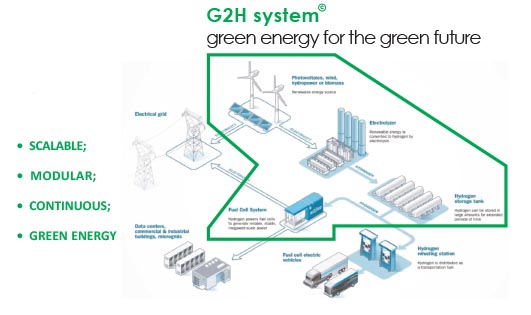
Smaller power generators use electrolysis to generate and store power for electricity production. That is why we’ve focused on electrolysis in our “G2H SYSTEM“ solutions because it’s considered the cleanest way to generate hydrogen for power generation.
Hydrogen Electrolysis: Electrolysis is the process of splitting water into hydrogen and oxygen atoms. The process takes place in a special unit known as an electrolyzer – a device that operates pretty much like a fuel cell in reverse. Indeed, many small-scale hydrogen generator manufacturers, use fuel cells to create hydrogen from water molecules.
Similar to the fuel cell, the electrolyzer comprises an anode and a cathode separated by an electrolyte. The way the unit produces hydrogen primarily depends on the type of electrolyte.
Hydrogen produced and unused can be stored in tanks and/or pipelines without energy loss.
THE HYDROGEN GENERATOR
The hydrogen gas produced during electrolysis can then be used to small generators power electrical appliances, bus, cars and even power electrical large facilities.
The hydrogen produced acts almost as natural gas. It can be delivered to fuel cells to generate electricity and heat or run an engine. Larger plants also use it in combined cycle gas turbines to produce large amounts of centrally generated electricity.
Hydrogen burns efficiently and electrolysis converts almost all raw materials, such as water, into useful energy. This allows you to produce much more electricity (watts) per unit of fuel compared to other generator types.
The other added value is that a hydrogen generator will run much longer than gasoline and other generators, assuming the same amount of fuel.
The “G2H SYSTEM” solutions, hydrogen generators provide electricity during the period when the sun or wind cannot be used to generate electricity.
Hydrogen gas can not only be used only as balancing energy in the solar or wind farms, it can be used in other locations to supply electricity to the given facility, plants, buildings through additional generators.
OPERATING ENVIRONMENTS
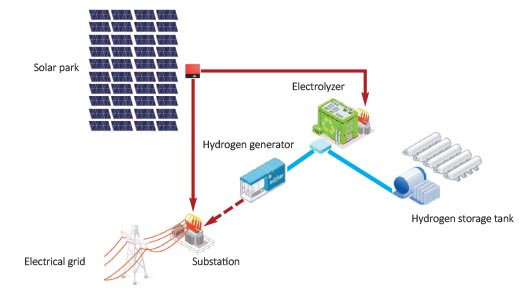
1 – Green energy by solar park with HYDROGEN generator – for ENERGY BALLANCE.
The part of the electricity generated by the solar modules is immediately fed into the high or middle voltage electricity grid directly via substation or transformer. The other part of the electricity generated by the solar modules provides the energy supply needed for electrolysis. Hydrogen generated during electrolysis is stored in the tanks. The hydrogen generator obtains the hydrogen needed to operate it from the storage facilities at the time when electricity is needed (for balancing) during low or no-sun periods.
The solar park combined with the hydrogen generator built in this structure, on the one hand, produces completely “green hydrogen” in addition to electricity from renevable source and, on the other hand, provides a solution for a balanced energy supply.
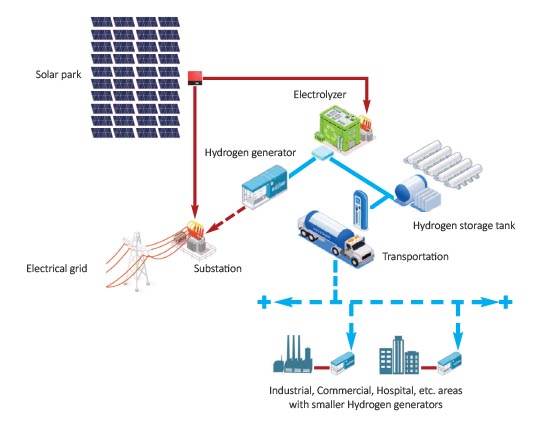
2 – Green energy by solar parks & hydrogen generators – for ENERGY BALANCE TO THE ELECTRICAL GRID AND ENERGY FOR OTHER LOCATIONS.
The part of the electricity generated by the solar modules is immediately fed into the high or middle voltage electricity grid directly via substation or transformer. The other part of the electricity generated by the solar modules provides the energy supply needed for electrolysis. Hydrogen generated during electrolysis is stored in the tanks. The hydrogen generator obtains the hydrogen needed to operate it from the storage facilities at the time when electricity is needed (for balancing) during low or no-sun periods. On the other hand hydrogen is transported in tank trucks for small hydrogen generators to different locations.
The solar park built in this combined structure, produces completely “green hydrogen” in addition to electricity from a renevable source and provides a solution with a balanced energy supply, and enabling users in different locations to be supplied with electricity generated by a small hydrogen generator.
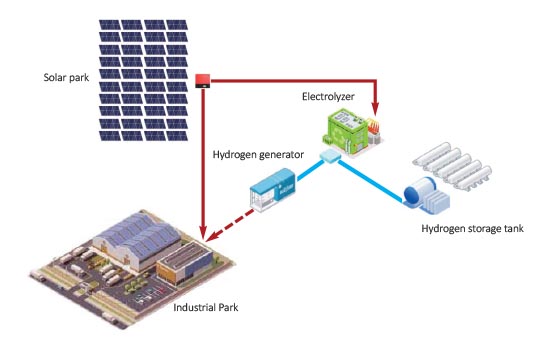
3 – Green energy by solar parks & HYDROGEN GENERATORS TO INDUSTRIAL OR OTHER AREA.
Part of the electricity generated by the solar modules goes directly to the industrial or commercial area or hospitals, etc. outside the medium-voltage electricity supply network. The other part of the electricity generated by the solar modules provides the energy supply needed for electrolysis. Hydrogen generated during electrolysis is stored in tanks.
The solar park, combined with a hydrogen generator built into this structure, produces completely “green hydrogen” in addition to electricity from renewable sources, and allows electricity to be supplied without being connected to a medium-voltage electricity supplier.
4 – Green energy by solar parks & hydrogen generators FOR DIFFERENT LOCATIONS
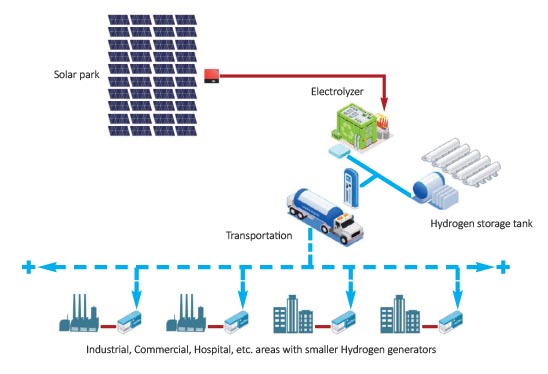
The electricity generated by the solar modules provides only the energy supply needed for electrolysis. Hydrogen generated during electrolysis is stored in tanks. Hydrogen is transported in tank trucks for hydrogen generators to different locations.
The solar park combined with an electrolyser built into this structure produces completely “green hydrogen” in addition to electricity from renewable sources, and enabling users in different locations to be supplied with electricity generated by a small hydrogen generator.
Export-Import between Kazakhstan and Hungary and EU. In the course of our commercial activity, we would like to enrich the range of products available in Kazakhstan with high-quality products, tools
AGRICULTURE – Trading & Investment & IntegrationEffective and efficient agriculture is one of the keys to the future. Our goal is to spread as widely as possible the new technological